What if that foraged mushroom in your stew was holding a deadly secret? In a quiet Alpine village, a culinary tradition turned into a medical riddle, keeping scientists on their toes for over a decade. Now, urgent warnings are coming from experts about one unsuspecting ingredient that may be linked to a rare, devastating disease—ALS.
The Unfolding Mystery in Montchavin
The French village of Montchavin, sitting near the ski resort of La Plagne in Savoie, is your quintessential postcard-perfect mountain locale. But in 2009, its tranquility was shattered when a general practitioner noticed something most unusual: for the third time, she diagnosed a resident with Amyotrophic Lateral Sclerosis (ALS), also known as Charcot disease, a rare and fatal neurodegenerative illness. That’s three cases in one tiny village—something definitely wasn’t right. She didn’t just frown and move on; she called in specialist reinforcements.
This remarkable observation kicked off a meticulous investigation—a decade-long marathon through medical records, conversations, and some serious scientific sleuthing. Soon, the team uncovered something even more striking: between 1991 and 2013, Montchavin had seen 14 cases of ALS. Half of those diagnosed had already passed away. These weren’t family clusters either; the affected individuals, aged 39 to 75, knew each other socially but shared no blood ties.
When the Usual Suspects Are Innocent
A cluster like this usually points to a common cause. So, the search began. Environmental hazards? Toxins in the water? Lead? Radon gas in the homes? Air or soil pollution from heavy metals or pesticides? The investigators ran down every avenue (and possibly a few winding mountain trails) and came up empty-handed at every turn.
Enter Peter Spencer, a seasoned toxicologist from Oregon, USA. He had seen something similar before—on Guam, in the Western Pacific. There, the mystery had boiled down to the consumption of seeds from a local plant, the Japanese cycad (or « petit rameau » in the Antilles), which was linked to a spate of ALS cases. Could something just as innocuous-sounding be to blame in Montchavin?
The Real Culprit: Fungi in Disguise
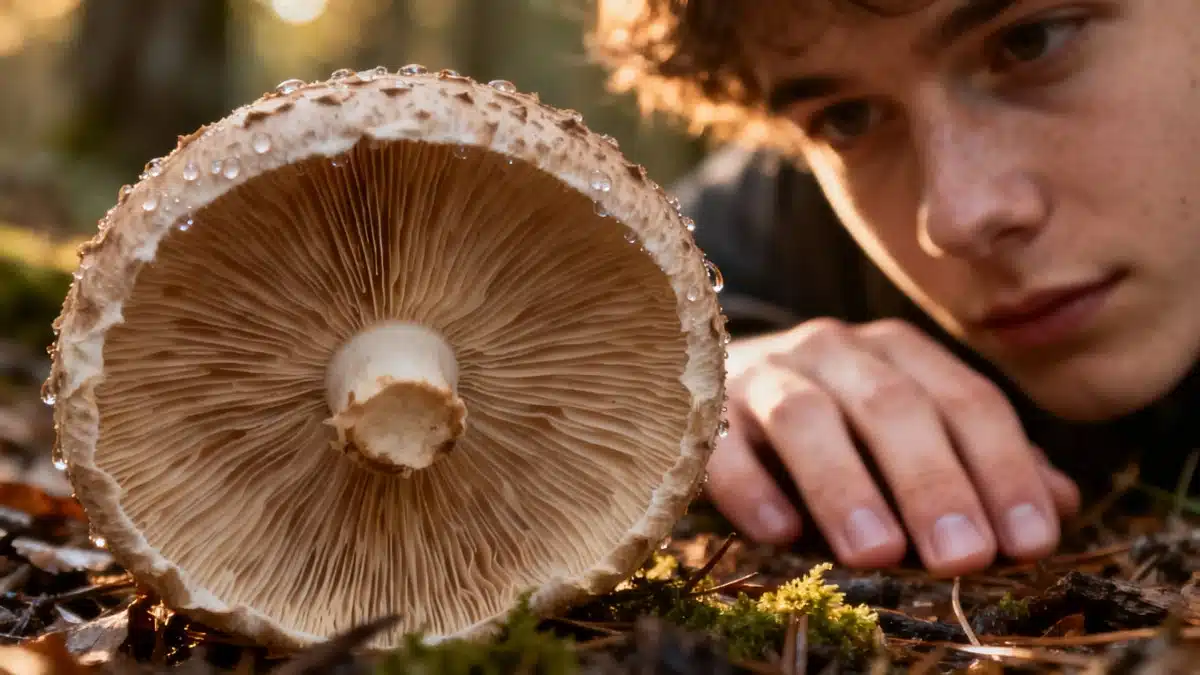
This is where the story takes a fungal twist. Spencer turned attention away from plants and straight toward a culinary delicacy with a dark side: the false morel, Gyromitra gigas. This mushroom, popular with some foragers (and infamous among mycologists), contains toxins with action mechanisms similar to those found in the Japanese cycad seeds.
According to findings published in the Journal of Neurological Sciences, the connection was unsettlingly clear. All 14 ALS patients in Montchavin had consumed false morels (sometimes alongside true morels) on several occasions in prior years—something not observed among other villagers. A few even remembered feeling distinctly unwell after sumptuous meals featuring both authentic and « impostor » morels. There’s a reason the sale of Gyromitra gigas has been banned in France since 1991: its toxicity can be severe, even outside the risk of ALS.
- 14 confirmed ALS cases in Montchavin linked to false morel consumption
- No familial connections among patients
- False morel sale banned in France since 1991
If that doesn’t make you scrutinize your next wild mushroom sauté, here’s more food for thought: Finland reported a similar spike in ALS in a region where false morel is considered a delicacy.
A Broader Warning—and a Lesson from Far Away
This isn’t only a French phenomenon. On the small island of Guam, after tradition gave way and cycads were removed from the kitchen, local ALS rates plummeted. Maybe there’s a not-so-subtle lesson in willingness to change our plates—sometimes, long-standing traditions can carry unforeseen risks.
So, should you shun all wild mushrooms? Not necessarily. But experts now urge extreme caution with false morels. Symptoms after consumption can range from discomfort to something far more serious, as Montchavin’s tragic experience has made all too clear.
The bottom line: When you’re experimenting in the kitchen with wild ingredients, stick to what’s safe—and legal. That backcountry mushroom might make your risotto interesting, but it could come with consequences nobody wants as a side dish.

John is a curious mind who loves to write about diverse topics. Passionate about sharing his thoughts and perspectives, he enjoys sparking conversations and encouraging discovery. For him, every subject is an invitation to discuss and learn.